The Record
The wreck of the 1622 fleet
Every piece we make traces back to one bad night in September. Here is the account, in order.
1618–1622
Silver out of Potosí
Ore hauled from the mountain at Potosí was refined, taxed and struck into cobs — irregular, hand-cut coins stamped one blow at a time. Each carried the assayer's mark, the mint, and the cross of Spain. They were currency, not ornament, and they were minted by the ton.
4 September 1622
Twenty-eight ships leave Havana
The fleet sailed late in the season, heavy with silver, gold, copper, indigo and tobacco. The Nuestra Señora de Atocha rode near the rear as the almiranta, the armed rearguard, with her registered treasure and a good deal more that never touched the manifest.
6 September 1622
The hurricane
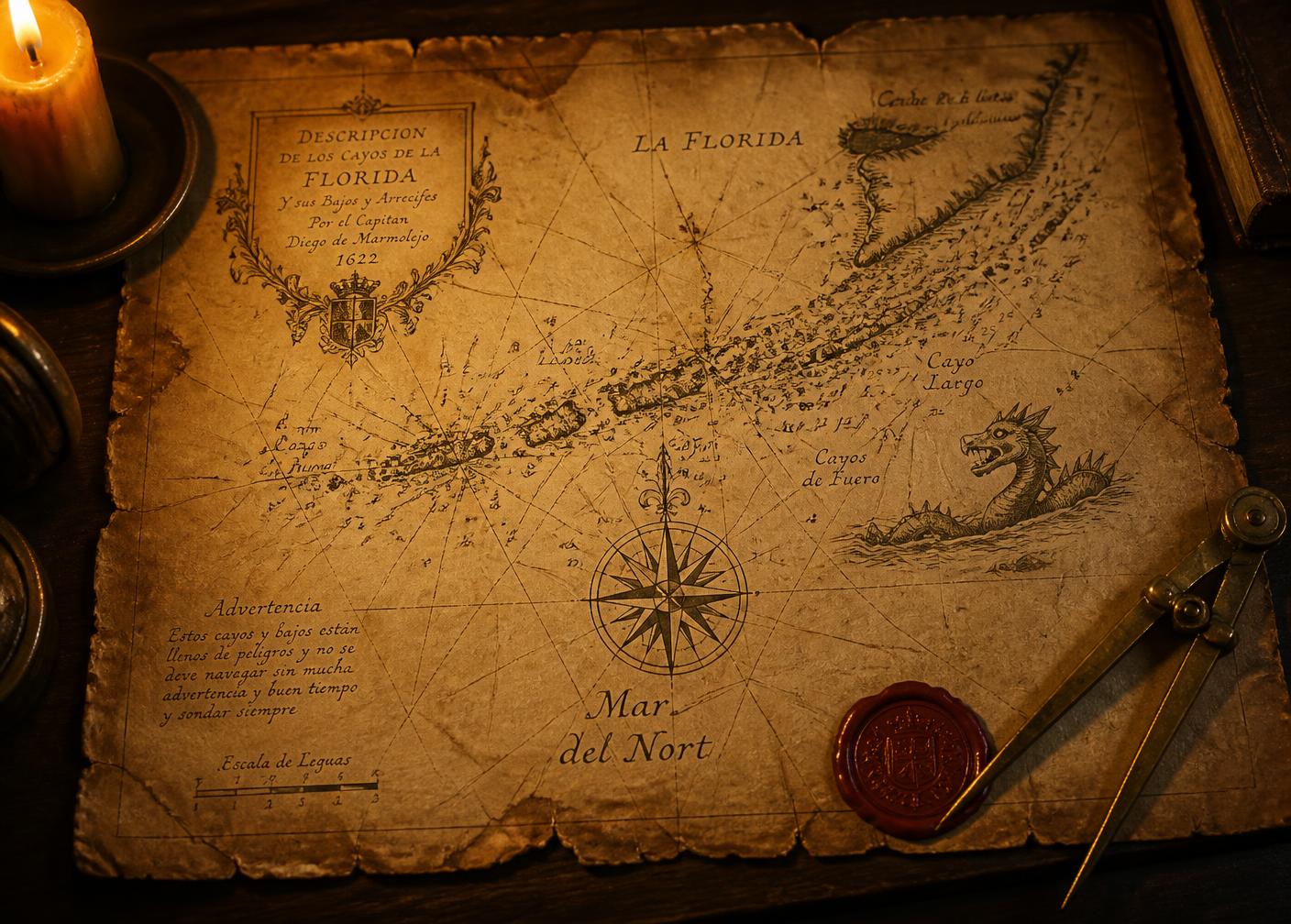
A day out, the storm took them off the Florida Keys. Eight ships were lost. The Atocha was driven onto a reef and went down in fifty-five feet of water; five people survived out of two hundred and sixty-five. Spanish salvors searched for years and never found her hull.
1971–1985
The search
Mel Fisher's crews worked the Keys for sixteen years on the strength of archival research and stubbornness, following a trail of scattered ballast and coins. In July 1985 they reached the main pile — silver bars stacked like cordwood, chests of cobs, emeralds, and gold chain.
Today
From the sea floor to the bench
Recovered cobs carry their own record: a mint, a date where the strike allows, and the patina of three and a half centuries underwater. We set the genuine ones sparingly and one at a time. For everything else we strike faithful replicas, so the design can be worn hard without risking the history.
Hold a piece of it
The vault holds a small number of genuine recovered cobs, each set once and sold once.
Enter the vault